A surprising result
Your labs say pre-diabetic. Nothing about your life says why.
Understand your own metabolism and find your personal levers, taught by a metabolism scientist who has been exactly where you are.
Find your most likely driverIs this you?
- You were told you are pre-diabetic and it made no sense.
- You are vegetarian or plant-forward and assumed you were safe.
- The advice you got was generic. Eat less, move more, come back in a year.
- You want to understand what is happening, not just go on a diet.
What this is
Rigor without fear. Data without obsession. A method, not a miracle.
Population advice fails individuals — the same meal does different things to different bodies. So instead of another generic checklist, Finding Baseline teaches you to find your own levers. Education, not medical advice. Every claim sourced. No supplements sold here.
-
01
Observe
Get the full picture. Your A1c, fasting glucose, and the patterns behind them, read in context rather than isolation.
-
02
Experiment
Change one variable at a time. Food order, timing, sleep, movement. Watch what your body actually does, not what a chart predicts.
-
03
Find your levers
Keep what moves your number, drop what does not. Two or three changes that are genuinely yours, not a generic checklist.
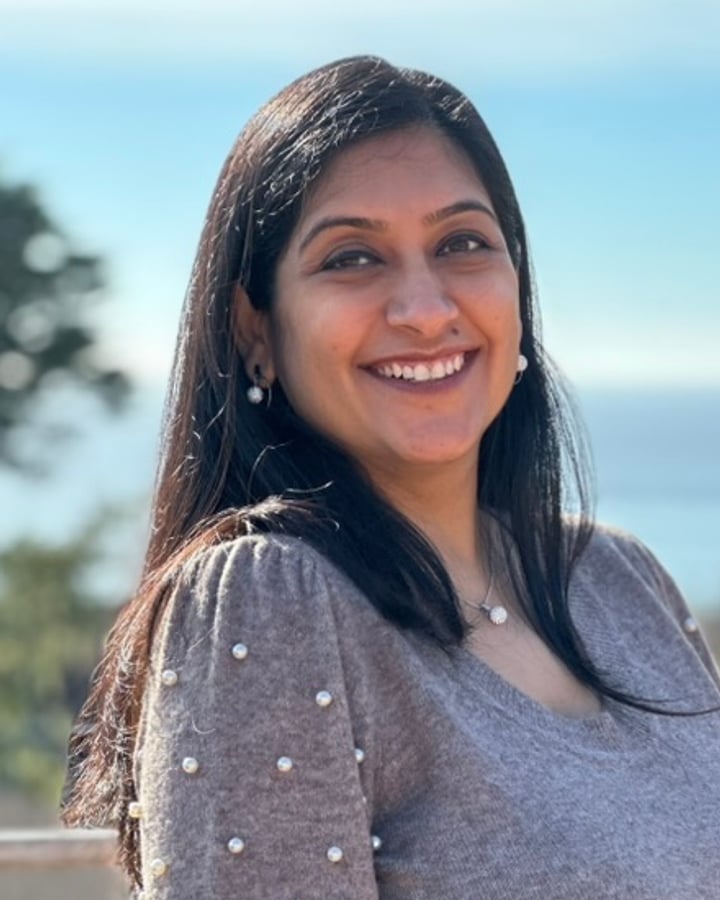
Who is teaching this
Dr. Ruchi Masand
I spent my research career studying how cells turn food into energy — mitochondrial biology and energetics at Baylor College of Medicine and UCSF. Then my own bloodwork came back pre-diabetic, and it made no sense: I hike, I do yoga, I cook real food. So I did the one thing my training was actually for — I ran a careful experiment on myself, one variable at a time, and brought my A1c back into the normal range. Finding Baseline is the explanation I needed that year and couldn't find anywhere.
Read the full storyStart reading
All writingThe decoder
Start by understanding your result, not fearing it
A few questions about your numbers, your diet, and your body return a plain-language read of your most likely driver on screen — with the full result and your first experiment delivered by email. About three minutes.
Education, not medical advice. Always discuss results with your clinician.